Unraveling Tire Strategy Shifts and Safety Car Timing Patterns That Reshape Outright Winner Odds in Formula One Circuits During High-Stakes European Rounds
Written by Elena Beck · Oct 30, 2026
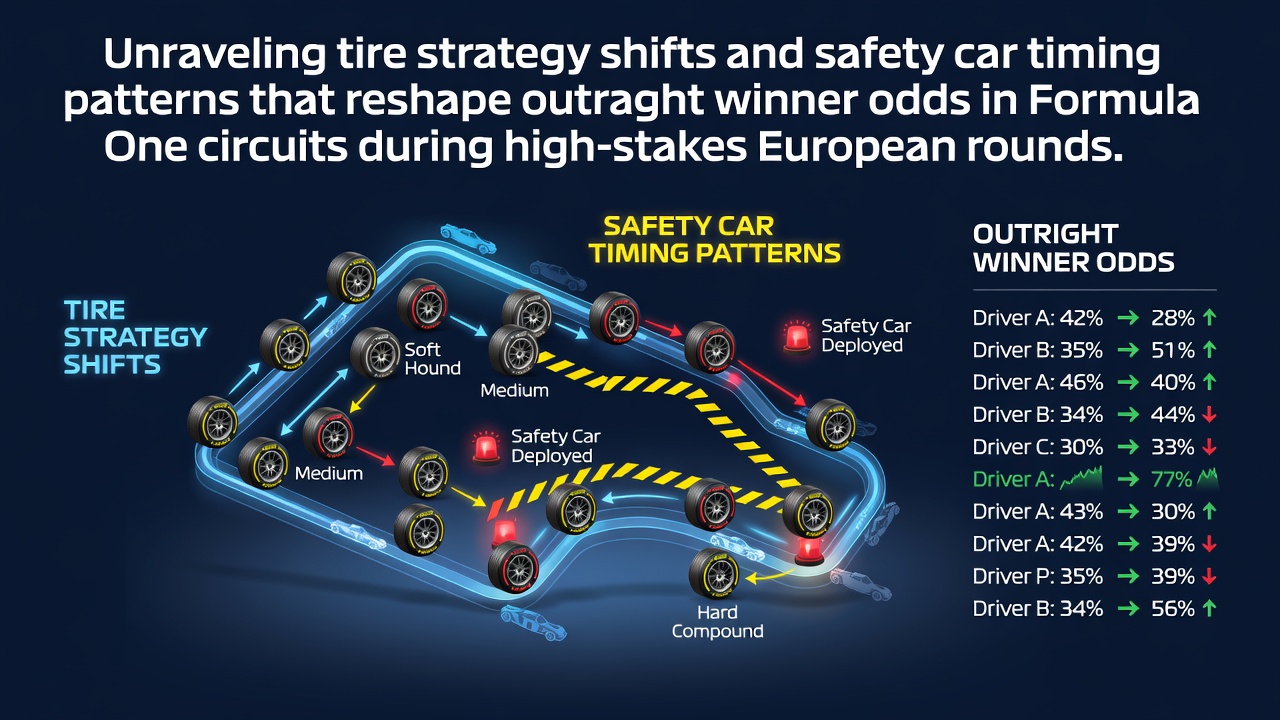
Unraveling Tire Strategy Shifts and Safety Car Timing Patterns That Reshape Outright Winner Odds in Formula One Circuits During High-Stakes European Rounds
European Formula One rounds in circuits such as Monza, Silverstone and Spa-Francorchamps have long featured complex interactions between tire compound selections and safety car deployments that directly influence outright winner probabilities tracked by betting markets. Data from the FIA shows that teams adjust tire strategies based on degradation rates observed across multiple sessions, with softer compounds offering early pace advantages while harder options extend stints during prolonged green flag periods.
Researchers at institutions focused on motorsport analytics have documented how safety car timing alters pit windows, often bunching the field and allowing undercutting opportunities that shift projected finishing orders. In high-stakes October events like those scheduled for 2026, these patterns become more pronounced because championship points carry greater weight, prompting teams to balance risk and reward more deliberately.
Tire Compound Choices and Degradation Patterns
Teams receive allocations of soft, medium and hard tires for each European event, and historical telemetry reveals that compound performance varies significantly by track surface and ambient temperatures. Observers note that softer tires generate faster lap times in the opening stint but suffer accelerated wear on abrasive surfaces like those at Circuit de Barcelona-Catalunya, whereas medium compounds provide a middle ground that teams frequently select when forecasts indicate variable weather.
Studies from European motorsport research groups indicate that degradation curves flatten under certain conditions, allowing drivers to maintain competitive pace longer than initial simulations predict. This data feeds directly into odds calculations because bookmakers adjust outright winner probabilities when teams commit to two-stop versus three-stop strategies based on observed tire life.
Safety Car Deployments and Their Timing Effects
Safety car interventions occur at predictable intervals in European rounds due to factors including debris, weather shifts and mechanical retirements, and records compiled over multiple seasons show clustering around laps 20 to 35 in many races. When a safety car appears early, teams gain the chance to pit without losing substantial track position, which compresses time gaps and elevates the chances for drivers starting from mid-grid positions.
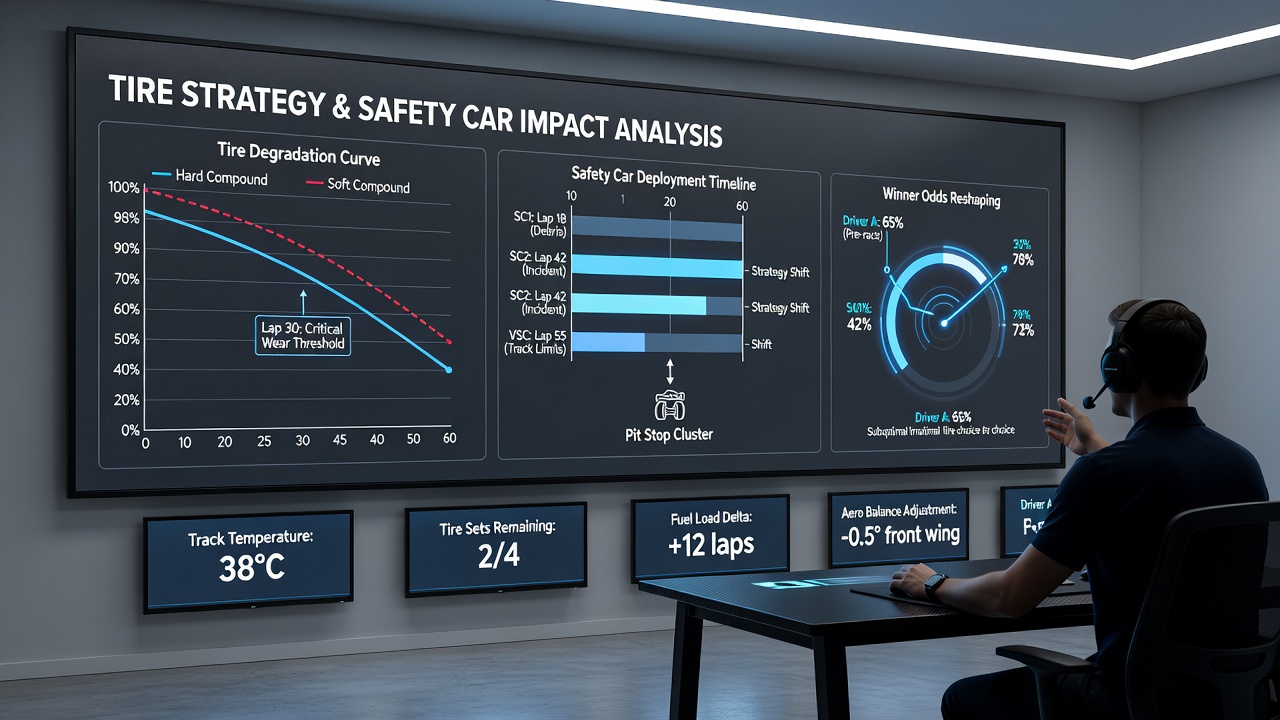
Analysts tracking these events have found that late safety cars, particularly those after lap 40, tend to favor drivers on fresher tires who can push harder in the remaining laps. Such timing disrupts earlier strategic assumptions and forces last-minute adjustments that betting markets incorporate into updated outright winner odds within minutes of the restart.
Integration of Patterns Into Winner Odds Calculations
Betting platforms incorporate tire wear models and safety car probability matrices derived from past European races when setting initial odds for each round. According to figures released by motorsport data providers, circuits with higher historical safety car rates see wider pre-race odds spreads because uncertainty around pit strategy amplifies outcome variance.
One study conducted by academic researchers examined correlations between tire allocation usage and final classification results across ten consecutive European events, revealing that teams opting for aggressive soft-tire starts gained positions when safety cars neutralized the race at specific windows. These findings help refine probability models that adjust outright winner odds in real time as race conditions evolve.
Case Examples From Recent European Rounds
Take the sequence of events at the 2025 Italian Grand Prix where early tire degradation on softer compounds combined with a mid-race safety car to allow several drivers to switch strategies mid-stint. Observers recorded how this sequence elevated the finishing prospects for midfield runners who capitalized on the neutralized period to gain track position without additional pit stops.
Similar dynamics appeared at the Spanish Grand Prix in the same season, where data indicated that teams monitoring tire temperature trends adjusted their calls after the first safety car, producing measurable shifts in projected winner probabilities. European rounds scheduled for October 2026 will likely follow comparable patterns given consistent regulatory frameworks and track characteristics.
Conclusion
Tire strategy decisions and safety car timing continue to intersect in ways that reshape outright winner odds across Formula One's high-stakes European calendar. Data compiled by regulatory bodies and research organizations demonstrates measurable impacts on race outcomes, providing a factual basis for understanding how these elements interact during October events. Patterns observed in prior seasons supply the foundation for ongoing analysis of future rounds.