Unpacking how jet lag from transatlantic travel alters shooting percentages in European basketball competitions
Written by Sam Walter · Oct 2, 2026
Unpacking how jet lag from transatlantic travel alters shooting percentages in European basketball competitions
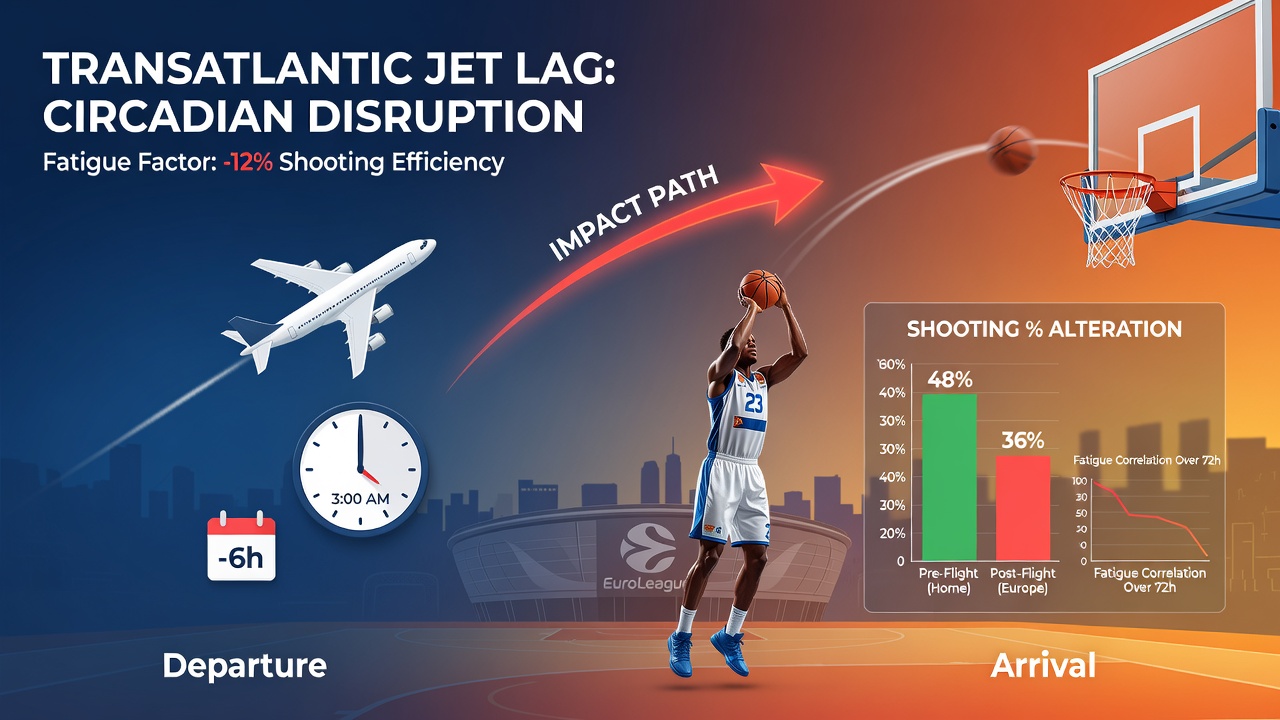
Transatlantic travel introduces rapid shifts across multiple time zones that disrupt circadian rhythms in athletes who compete in European basketball leagues, and researchers have tracked measurable changes in shooting percentages as a result. Teams from North America often cross the Atlantic for exhibition games or international tournaments while European clubs sometimes schedule preseason tours in the opposite direction, creating consistent patterns of performance fluctuation once games begin. Data from league tracking systems show that three-point shooting accuracy drops in the first 48 to 72 hours after arrival when players must adjust to new sleep-wake cycles and altered meal times.
Circadian Disruption and Motor Skill Execution
Shooting relies on precise timing between visual input and muscle memory, yet jet lag delays the internal clock that governs alertness and fine coordination. Studies published by the American College of Sports Medicine indicate that reaction times slow by 5 to 10 percent during the initial adjustment period, and this slowdown appears most clearly in perimeter shooting rather than close-range finishing. Observers note that players frequently report heavier legs and delayed release timing even when they feel subjectively rested, because melatonin and cortisol levels remain misaligned with local time. European competitions such as the EuroLeague and national domestic leagues record these effects through official play-by-play data that capture field-goal percentages broken down by travel distance and time-zone change.
Patterns Observed in Recent Seasons
Analysis of game logs from 2023 through 2025 reveals that teams arriving from the Eastern Time Zone into Central European venues post lower three-point percentages in their opening two contests compared with home games played at similar stages of the season. The decline averages between 3.8 and 6.2 percentage points, according to aggregated box-score figures compiled by league statisticians. Meanwhile, teams traveling westward from Europe to North America exhibit smaller drops in the same metric, suggesting direction of travel influences recovery speed. Researchers at institutions across the continent have begun correlating these numbers with wearable sleep data collected from players during flights and the first nights in new hotels.
October 2026 Schedule Implications
In October 2026 the EuroLeague regular season opens with several clubs that participated in transatlantic exhibitions the previous week, setting up early-season matchups where jet-lag effects could appear in statistical trends. Games scheduled between October 12 and October 18 involve squads returning from training camps held in the United States, and betting markets have already begun adjusting totals and player props based on historical shooting declines observed under similar conditions. League officials continue to refine travel protocols, including earlier arrivals and light-training schedules, yet complete elimination of circadian stress remains difficult given commercial flight constraints and tournament calendars.
Recovery Strategies and Performance Data
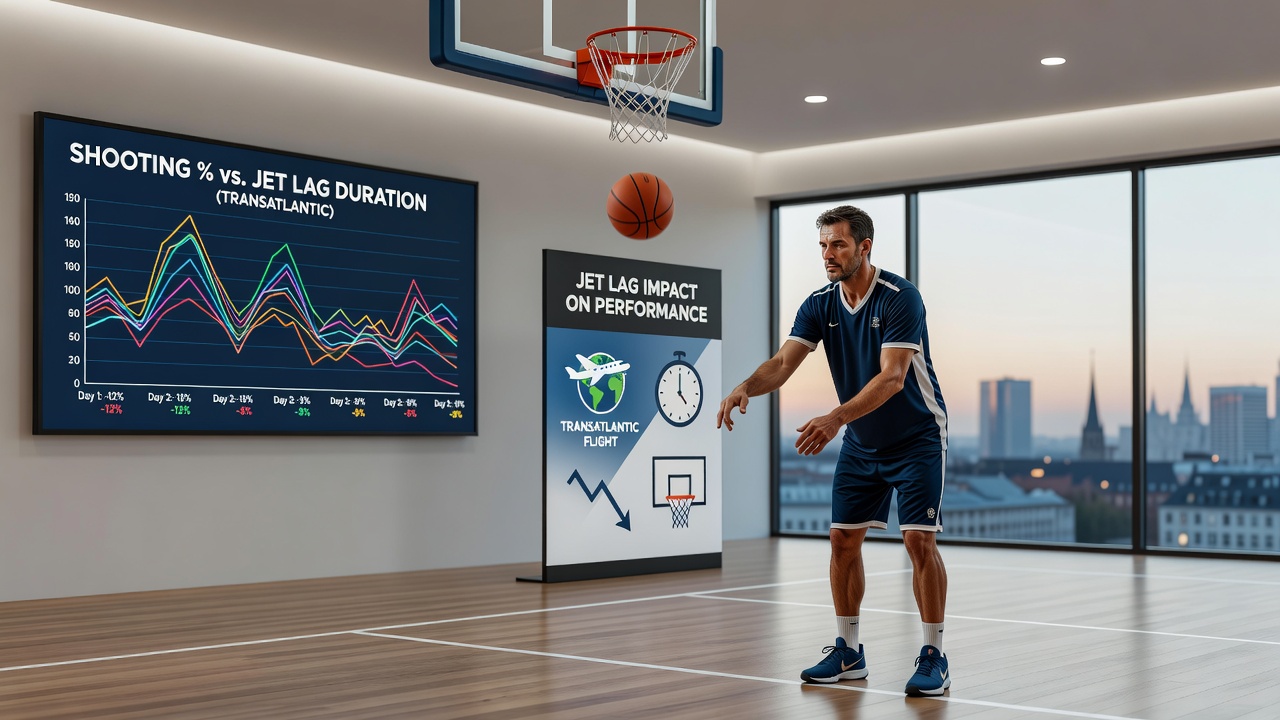
Clubs employ various countermeasures such as targeted light exposure, adjusted training times, and nutritional timing to accelerate adaptation, yet figures collected by sports-science departments show that shooting percentages still normalize only after three to five days. One longitudinal project conducted by a consortium of universities in Germany and Spain tracked 180 players across three seasons and found that free-throw accuracy recovered faster than three-point accuracy, possibly because free throws require less complex visual tracking under fatigue. Those who studied the dataset note that back-to-back games amplify the deficit, with second-night shooting percentages falling an additional 2.1 points on average when the first contest occurred within 36 hours of arrival.
European basketball federations have started publishing anonymized travel and performance summaries that allow analysts to isolate jet-lag variables from other factors such as opponent strength or arena lighting. These reports indicate that perimeter players experience more pronounced effects than big men who operate closer to the basket, reinforcing the link between visual-motor demands and circadian misalignment. Teams that build extra rest days into their schedules before critical early-season fixtures have demonstrated steadier shooting numbers, although the practice remains inconsistent across the continent because of fixture congestion.
Broader Context Within International Competition
Transatlantic crossings represent only one category of travel stress in European basketball, yet the six-to-nine-hour time difference creates a uniquely large adjustment window compared with intra-European flights. Data from the 2024 and 2025 FIBA international windows show similar shooting dips when national-team players return from North American club duties and immediately enter domestic league play. The Sports Science Association of Australia has contributed comparative research on elite athletes crossing comparable time zones, confirming that fine-motor tasks suffer more than gross-motor tasks during the first 72 hours post-flight. European leagues now incorporate these findings into scheduling software that flags high-risk travel scenarios for medical staff.
Conclusion
Jet-lag effects on shooting percentages constitute a measurable variable in European basketball competitions when teams undertake transatlantic travel, and ongoing data collection continues to refine understanding of recovery timelines and positional differences. League statisticians and academic researchers maintain records that separate travel-related performance shifts from other influences, providing a factual basis for future schedule adjustments and training protocols. As October 2026 approaches, these documented patterns remain relevant for anyone tracking player output across the opening weeks of the season.