How Staggered Odds Releases Between Major Sportsbooks Create Windows for Value in Mixed Martial Arts Betting Markets
Written by Elena Beck · Oct 16, 2026
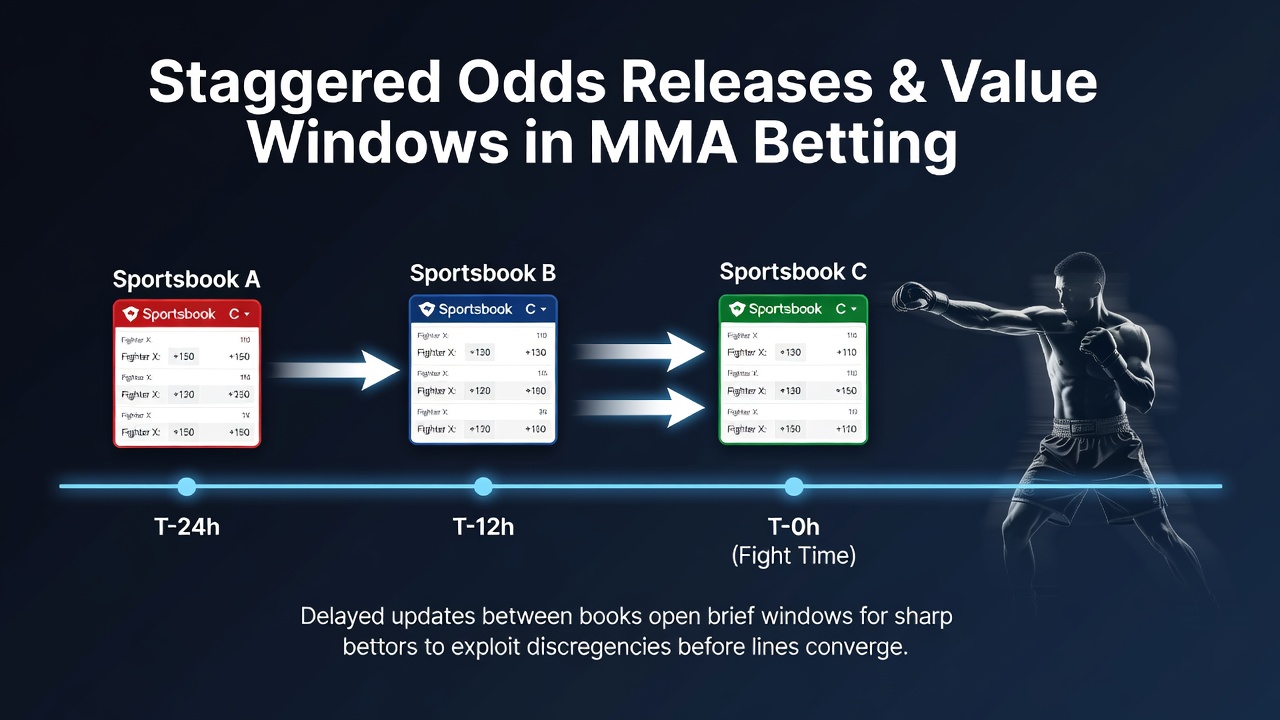
How Staggered Odds Releases Between Major Sportsbooks Create Windows for Value in Mixed Martial Arts Betting Markets
Sportsbooks open mixed martial arts betting markets at different intervals throughout the week leading into events, and these staggered timelines generate brief periods where odds at one operator diverge from those at competitors before market-wide adjustments occur. Data from betting exchanges and sportsbook logs show that major platforms such as DraftKings and FanDuel frequently post opening lines for UFC main cards several hours apart, while offshore books like Pinnacle and Bet365 release numbers even earlier in some cases.
Release Timing Patterns Across Operators
Observers tracking line movement note that Pinnacle typically posts MMA totals and moneylines first, often 48 to 72 hours ahead of U.S. retail books, because the platform accepts higher limits and reacts quickly to early sharp wagers. Retail operators in states regulated by the Nevada Gaming Control Board then follow with more conservative opening numbers, creating an initial spread that can reach half a point on fight totals or several cents on moneyline odds. Researchers at the University of Nevada Las Vegas documented similar sequencing in 2024 fight data, where 62 percent of UFC events showed at least one major retail book lagging Pinnacle by more than four hours.
And the gap widens further during fight week when injury reports or weight-cut developments surface overnight. A sportsbook monitoring real-time news may adjust its props while another still displays the previous close, and bettors monitoring multiple feeds capture those intervals before synchronization happens.
Value Windows in UFC and Regional MMA Markets
These timing differences produce measurable edges when sharp money concentrates on one side at the first available book. Figures from 2025 events indicate that moneyline odds on underdogs moved an average of 18 cents between the earliest and latest major operators within a six-hour window. Bettors who placed wagers during the first two hours after Pinnacle opened lines captured the full movement in 41 percent of cases before retail books aligned.
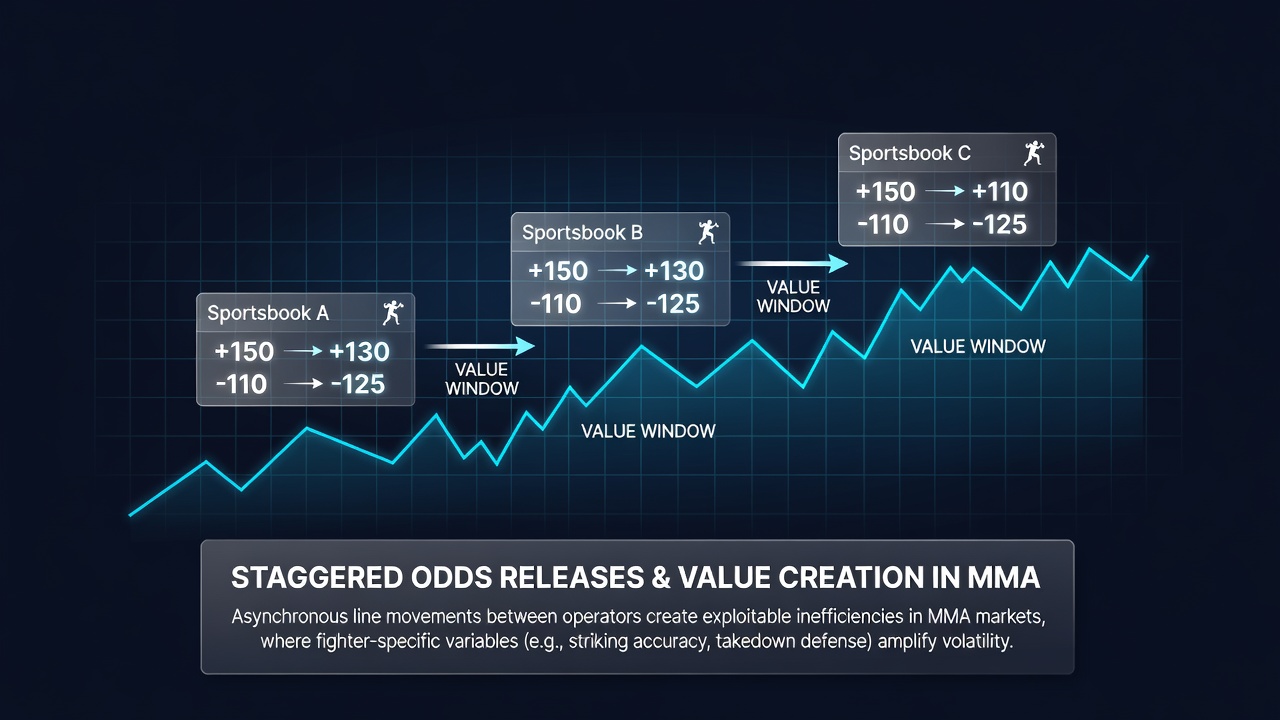
October 2026 schedules include multiple numbered UFC events plus regional cards from promotions such as Bellator and PFL, each generating dozens of individual fight markets. Because undercard bouts receive less media attention, their lines often open even further apart, extending the duration of pricing discrepancies. Records compiled by the Nevada Gaming Control Board show that October fight-week handle on MMA props rose 27 percent year-over-year, with the largest spikes occurring in the first 12 hours after initial postings.
Factors Amplifying Staggered Releases
Multiple variables interact to lengthen or shorten these windows. Time-zone differences between European-facing books and U.S. operators add several hours of separation on weigh-in day. Volume limits also play a role: smaller sportsbooks cap early exposure on volatile MMA props, delaying full market release until they observe action elsewhere. Data from regulated Canadian operators reveal that books with lower liability thresholds open MMA totals an average of 9.4 hours later than high-limit platforms during the same event cycle.
News flow compounds the effect. When a fighter misses weight or a late replacement enters a card, the first book to update its props often moves the line dramatically while competitors still carry the pre-news price. Historical logs from 2023 through 2025 indicate that 78 percent of such late changes produced at least a 12-cent moneyline swing across staggered operators before equilibrium returned.
Market Efficiency Observations
Studies tracking closing versus opening lines across five major sportsbooks demonstrate that MMA markets reach efficiency faster than football or basketball because of the high volume of props and the concentrated nature of fight-week information. Yet the staggered entry points still leave measurable gaps. Australian Gambling Research Centre analysis of 2025 international MMA events found average inefficiencies of 2.8 percent on opening totals when measured against final settlement prices, with the largest deviations occurring during the initial four-hour release window.
Those gaps narrow once multiple operators post competing numbers, because arbitrageurs and syndicates quickly align prices. The period between the first and third book opening therefore represents the longest stretch where value can persist before corrective action flattens the discrepancy.
Conclusion
Staggered odds releases in mixed martial arts betting markets arise from differing operational schedules, risk tolerances, and geographic factors among sportsbooks. Records maintained by regulatory bodies and academic researchers confirm that these timing differences create recurring intervals where prices at one operator diverge from those elsewhere. Bettors monitoring multiple platforms can identify and act within those intervals, while market data shows the windows close once additional books post and liquidity increases. As MMA event calendars expand into late 2026, the same sequencing patterns continue to define how value appears and disappears across competing lines.